Where to go

Where to go

Cities, lake towns, alpine villages, and the routes that make them work.

192Bases, towns, and regions
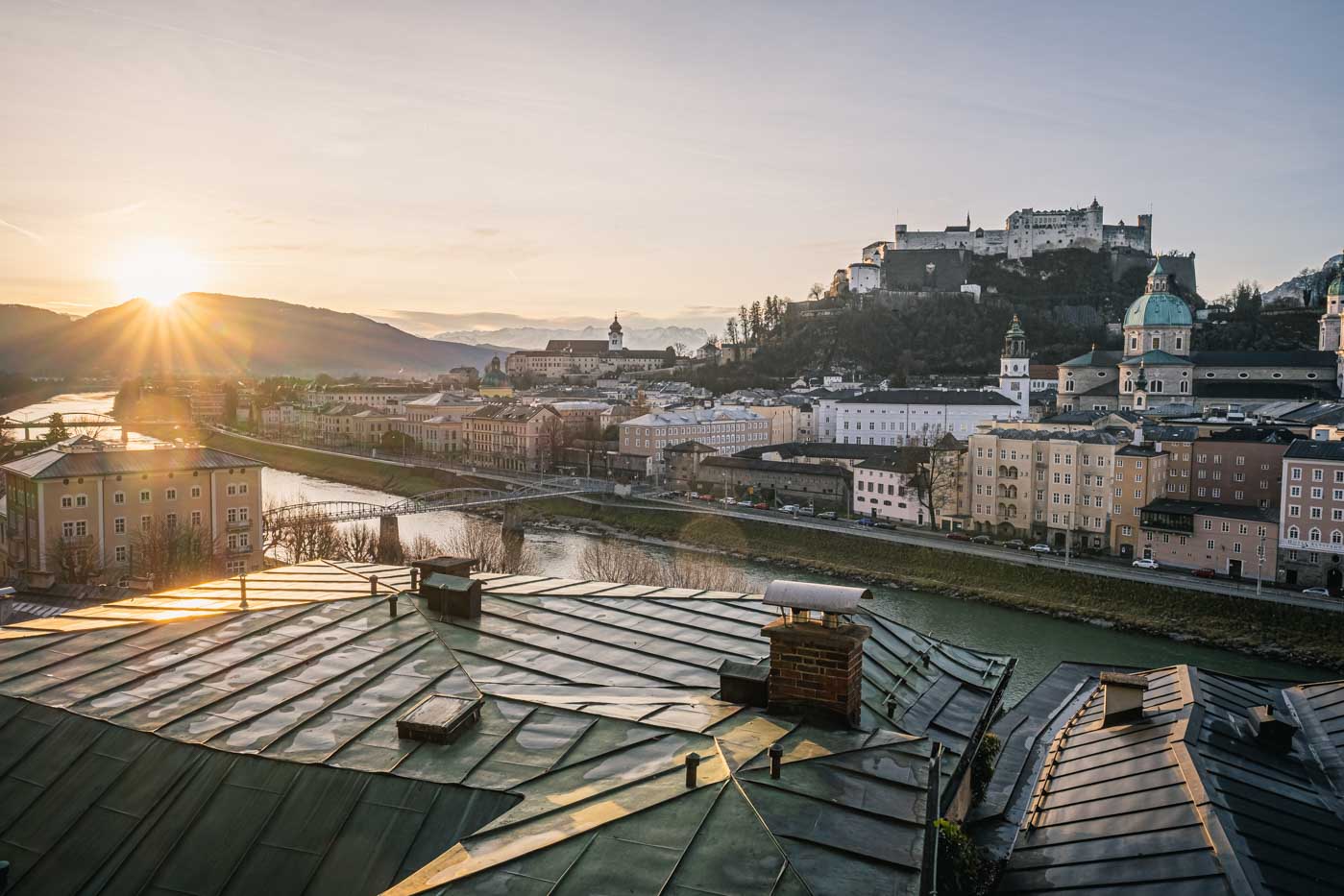
Featured place above the old-town skyline

192 destinations

village

Most travelers pass through the Lammertal on their way to Hallstatt or Gosau without stopping. That's exactly what makes Abtenau work as a base. The village sits at the foot of the Tennengebirge massif where the valley opens, with the Lammerofen gorge on its doorstep and several show caves in the limestone cliffs above.

Abtenau

8 places

village

The Achensee, Tyrol's largest lake, is a deep alpine body of water that sits between two mountain ranges and turns a shade of turquoise that still surprises people who've seen a lot of Austrian lakes.

Achenkirch

7 places

village

The library hall at Stift Admont is the world's largest monastic library, and it earns that superlative. The Baroque interior, meaning the style of the 17th and 18th centuries characterized by gilded ornament, painted ceilings, and a sense of theatrical excess, fills a single hall with frescoed vaulting, white and gold shelving, and painted figures that

Admont

8 places

village

Every building in Alpbach is made of dark wood and flowers, and that's not an accident. The village earned its designation as Austria's most beautiful village specifically because it has protected this unified appearance, refusing the concrete and glass that arrived in neighboring ski resorts during the 1960s and 1970s.

Alpbach

14 places

village

Village on the Altausseer See. Birthplace of Klaus Maria Brandauer. Home to Salzwelten Altaussee, where Nazis stored 6,500+ looted artworks (Michelangelo, van Eyck, Vermeer). Local miners saved them. One of the most beautiful lakes in the Salzkammergut.

Alt-Aussee

2 places

town

Amstetten occupies the Westbahn corridor between Vienna and Linz and rarely features in anyone's travel plans. That's honest. What it does offer is the gateway to the Mostviertel, a farming region that produces Styrian-style pear cider (Most) with a long tradition and a culture distinct from the alpine villages to the south.

Amstetten

9 places

village

Austria's largest lake (entirely within borders). Gustav Klimt's summers (1900-1916). Gustav Mahler's symphonies. Sailing, diving, cycling. Spectacularly clear.

Attersee

15 places

country

Austria packs more into 84,000 square kilometers than most countries twice its size. Nine Bundeslaender (federal states) reach from the Pannonian plain at the Hungarian border to the Arlberg pass above the Rhine valley, each with its own wine, dialect, and architectural character. The train network is clean, reliable, and genuinely enjoyable.

Austria

town

Bad Aussee sits at the geographic center of Austria, a fact that locals cite with some pride, and it anchors the inner Salzkammergut with a quiet authority that the more famous Hallstatt can't match as a base.

Bad Aussee

9 places

village

The Rogner Bad Blumau thermal spa looks like something that fell to earth from a different planet. Designed by the Viennese artist Friedensreich Hundertwasser in the 1990s, the complex is built around his signature principles: no straight lines, living roofs covered in grass and wildflowers, organic shapes that seem to grow from the ground rather than stand

Bad Blumau

11 places

village

Hill village above Hallein. Home to Salzwelten Hallein, one of the oldest salt mines in the world (2,500+ years). Paracelsus worked here. Celtic artifacts among the most significant in the German-speaking world.

Bad Dürrnberg

1 place

town

The grandest Gastein spa resort. Belle Époque and Art Nouveau architecture clinging to a cliff face. The Gasteiner Wasserfalle cascade through the centre. Radon thermal springs. Emperor Franz Joseph I was a regular visitor. UNESCO World Heritage candidature underway. Cultural renaissance in progress.

Bad Gastein

16 places

town

Bad Hofgastein is the sensible choice in the Gastein Valley for travelers who want thermal spa access and good skiing without the vertical drama of Bad Gastein. It sits on relatively flat valley floor terrain, which means easier walking, more accessible slopes, and the Alpentherme spa as a comfortable centerpiece.

Bad Hofgastein

12 places

town

Franz Joseph signed Austria-Hungary's declaration of war on Serbia at Bad Ischl on July 28, 1914, sitting in the Kaiservilla where he had spent every summer for 60 years. That document set the First World War in motion. Bad Ischl's story goes far deeper than its spa town surfaces suggest.

Bad Ischl

17 places

town

Bad Kleinkirchheim pulls off something most Austrian mountain destinations only claim: you can ski all morning and walk directly into a thermal spa in the afternoon without changing location. The Roemerbad and St. Kathrein Therme sit at the base of the ski area, and the connection is literal rather than metaphorical.

Bad Kleinkirchheim

12 places

town

Bad Radkersburg sits at the point where the Mur river forms the Austrian-Slovenian border, and the medieval bridge here once carried the most important trade route between the Adriatic and the northern Danube corridor.

Bad Radkersburg

7 places

village

Bad Tatzmannsdorf is Austria's easternmost significant spa destination, sitting in the rolling hills of southern Burgenland where the landscape flattens toward Hungary. The village is small but the Avita Resort and Burgenland Therme together make a substantial spa infrastructure.

Bad Tatzmannsdorf

10 places

town

Beethoven spent a dozen summers in Baden bei Wien and wrote parts of his Ninth Symphony here, which says something about how the Viennese creative class has long treated this spa town.

Baden bei Wien

20 places

state

Bavaria is the German state bordering western Austria. Munich, Berchtesgaden, the Königssee, and the alpine routes beside Salzburg form the part of Bavaria most relevant to Roam Austria.

Bavaria

town

Bavarian alpine town ~30 minutes from Salzburg. National Park. Königssee. Salt mines. Obersalzberg documentation centre. Eagle's Nest. Watzmann. Destillerie Grassl.

Berchtesgaden

18 places

village

The Werkraum Bregenzerwald in Bezau is one of the most quietly radical buildings in Austria: a 2013 structure by Peter Zumthor, the Swiss architect known for his Therme Vals and the Bruder Klaus chapel, built to exhibit and sell the handcraft products of the Bregenzerwald artisan community.

Bezau

13 places

town

Every January, Bischofshofen hosts the final stage of the Vierschanzentournee (Four Hills Tournament), the most prestigious event in ski jumping, and crowds of 15,000 or more fill the Paul Ausserleitner Schanze hill.

Bischofshofen

11 places

town

Bludenz sits where five valleys converge in southern Vorarlberg, which has made it a hub town since the medieval period. It's also where Milka chocolate comes from: the Suchard factory (now Mondelez) has been producing chocolate here since 1887, and the surrounding area calls itself "Schokoladenstadt." The five valleys radiating from Bludenz, including the

Bludenz

11 places

city

Bratislava and Vienna are 60 kilometers apart on the Danube, and for most of their histories they were parts of the same political structure. The Habsburgs, the dynasty that ruled Austria for six centuries, crowned their Hungarian kings in Bratislava's St.

Bratislava

19 places

town

Braunau am Inn has a serious problem with its most famous fact: Adolf Hitler was born here in 1889. The house on Salzburger Vorstadt 15 where he was born was for decades a source of political discomfort; in 2020 the Austrian government converted it into a police station to prevent it from becoming a pilgrimage site.

Braunau am Inn

10 places

city

The opera stage at Bregenz floats on Lake Constance with no roof, and performances proceed as long as there is no lightning. The Bregenzer Festspiele (Bregenz Festival) runs every July and August with a different production each year, mounted on a stage that can accommodate sets of extraordinary scale, and the backdrop is the lake and the Swiss Alps.

Bregenz

18 places

region

The Bregenzerwald has produced more celebrated contemporary wooden buildings per square kilometer than any other region in Austria, possibly in the world. Architects including Peter Zumthor, Hermann Kaufmann, and Bernardo Bader have built here, working with a local timber tradition that goes back to the guild craftsmen of the 16th century.

Bregenzerwald

8 places

village

Bruck sits where the Salzach valley meets the road south toward Fusch and the Grossglockner, making it the northern gateway to Austria's best-known high alpine road.

Bruck an der Großglocknerstraße

5 places

town

The Eiserner Brunnen in Bruck an der Mur's Hauptplatz is a late Gothic wrought-iron well from 1626, one of the finest examples of its type in Styria. The ironwork tradition it represents is central to this part of Styria, where the Erzberg iron ore mountain nearby fed a metalworking economy from the medieval period through the industrial era.

Bruck an der Mur

8 places

city

Vienna and Budapest were the twin capitals of the Habsburg empire, the dynasty that ruled Austria for six centuries, sitting 250 kilometers apart on the Danube and sharing an imperial structure that collapsed in 1918. The tension and connection between them runs through everything from their architectural character to their thermal bath culture.

Budapest

94 places

state

Burgenland, Austria's easternmost Bundesland (federal state), joined Austria only in 1921 from the former Kingdom of Hungary, and it shows. The flat Pannonian landscape, the stork villages, the Hungarian place names underneath the German ones, and the reed-lined shore of Neusiedler See all point east rather than alpine west.

Burgenland

state

Carinthia is the Austrian Bundesland (federal state) where people go to swim. The lakes, Wörthersee, Millstätter See, Ossiacher See, and Faaker See, warm to 26 or 27 degrees Celsius in summer, which is significantly warmer than alpine lakes further north and explains why Carinthia developed a resort culture oriented around water rather than mountains.

Carinthia

3 places

town

Český Krumlov, known historically as Böhmisch Krumau, is a medieval town whose castle sits on a loop of the Vltava river and whose layout has changed so little since the 17th century that UNESCO listed it in 1992.

Cesky Krumlov

16 places

country

The Czech Republic shares the longest single border with Austria of any neighboring country, running 362 kilometers from Gmünd in Lower Austria to the Böhmerwald forest.

Czech Republic

village

Damüls sits at 1,428 meters and holds the verified record for the highest average annual snowfall of any permanently inhabited settlement in Europe, which means the skiing here is reliably good and the season is long.

Damuels-Mellau

13 places

town

Schilcher is a blush wine made exclusively from the Blauer Wildbacher grape, which grows almost nowhere outside western Styria, and Deutschlandsberg sits at the center of the region that produces it. The wine is tart, dry, and unmistakably local, the kind of thing that makes food and wine travelers take a deliberate detour.

Deutschlandsberg

6 places

village

Dienten sits directly beneath the Hochkönig, a 2,941-meter limestone massif that rises from the Salzburg alpine foothills in a wall so vertical it is visible from Salzburg on clear days 30 kilometers away.

Dienten am Hochkoenig

11 places

city

Dornbirn is Vorarlberg's largest city and its most industrial one: the textile factories that made Vorarlberg's economy in the 19th and early 20th centuries were largely here in the Rhine valley, and the market square architecture reflects that mercantile prosperity. The city is not charming in the alpine sense but it is functional and well-connected.

Dornbirn

10 places

village

Richard I of England was held captive in the castle above Dürnstein from December 1192 to March 1193 after Leopold V of Austria arrested him on his return from the Third Crusade. The ransom paid for his release, 150,000 marks of silver, was so large that it funded the expansion of Vienna's city walls.

Duernstein

8 places

town

Ebensee sits at the southern end of the Traunsee where the lake's clear water meets the limestone walls of the Totes Gebirge, and it carries two histories that could not be more different. The salt transport trade that made the town economically important for centuries is one story.

Ebensee

10 places

village

A remote Walser settlement in the mountains above Dornbirn in Vorarlberg, accessible by a narrow mountain road (20–25 minutes by car) or hiking trails from the Gütle gorge below (2–3 hours on foot). A handful of farms in a high enclosed valley. The opposite of Dornbirn's urban character, 15 kilometers and about 1,000 altitude meters apart.

Ebnit

village

The Erzberg is an iron ore mountain that has been mined continuously since the 12th century and now looks like a series of enormous stepped terraces cut into reddish-brown rock, rising to 1,465 meters above sea level. It is the largest iron ore deposit in the Alps and one of the few still actively mined in Europe.

Eisenerz

10 places

city

Joseph Haydn worked for the Esterházy family in Eisenstadt from 1761 to 1804, composing in the palace's concert hall for a court that was among the wealthiest in the Habsburg world. During those four decades, he wrote most of his 104 symphonies and 68 string quartets, essentially inventing the symphony as a genre.

Eisenstadt

16 places

village

The Wilder Kaiser is a wall of limestone rising vertically above the Tyrolean Inn Valley, one of the most visually dramatic mountain frontages in the Alps, and Ellmau sits directly below it. The SkiWelt Wilder Kaiser-Brixental, with 280 kilometers of connected piste, is one of Austria's largest ski areas and Ellmau is its primary access point.

Ellmau

11 places

town

Enns received its town charter in 1212, making it Austria's oldest city by formal designation. That distinction tells part of the story: the Roman legionary fortress of Lauriacum, established here in the 2nd century AD at the confluence of the Enns and the Danube, was one of the most important military posts on the Roman empire's northern frontier.

Enns

9 places

continent

Europe is the continental parent for Roam Austria's Austrian and cross-border geography. It keeps countries and their regions in one honest hierarchy without implying that this site attempts to cover the whole continent.

Europe

village

The Faaker See is one of Carinthia's warmest swimming lakes, with turquoise water and a small island that appears in every photograph of the lake. The Mittagskogel, a 2,143-meter pyramid-shaped peak in the Karawanken range, rises directly above the southern shore in a way that gives the lake an almost theatrical framing.

Faak am See

9 places

village

Faistenau is a quiet hill village east of Salzburg, set above the Fuschlsee basin and close to the smaller, forested Hintersee.

Faistenau

1 place

city

Feldkirch has one of the best-preserved medieval town centers in western Austria, a place where the Altstadt (old town) with its arcaded streets and the Schattenburg castle above it have survived largely intact. Most visitors to Vorarlberg go to Bregenz and miss Feldkirch entirely, which is a real navigational error.

Feldkirch

16 places

village

The Bischofsmütze, the "Bishop's Hat," is a distinctively double-peaked limestone summit that watches over Filzmoos from the west like a landmark in a fairy tale.

Filzmoos

5 places

village

Hermann Maier, who survived a catastrophic fall at the 1998 Nagano Olympics and returned to win two gold medals in the same Games, grew up in Flachau. The piste named after him hosts World Cup night slalom events that draw international television audiences to a village most people had never heard of before Maier made it famous.

Flachau

8 places

district

Flachgau surrounds Salzburg with farmland, commuter towns, shallow northern lakes, and the first forested foothills of the Salzkammergut to the east.

Flachgau

town

The Braucommune Freistadt is a brewery that has been owned collectively by the town's citizens since 1770, one of the oldest surviving community-owned breweries in the world, and the beer it produces is still sold primarily in the town and region.

Freistadt

9 places

village

Friesach has a medieval moat that still holds water, which alone makes it worth a detour in Carinthia. The town, one of the oldest by town charter in Austria (1215), sits in a narrow valley north of Klagenfurt with three castle ruins stacked above it on the surrounding ridges.

Friesach

14 places

town

Fügen sits at the mouth of the Zillertal, the most touristically developed of the Tyrolean side valleys, which means it is the entry point for everyone heading toward Mayrhofen, Zell am Ziller, and the valley's ski areas further in.

Fuegen

11 places

village

The Fuschlsee is one of the smallest and clearest lakes in the Salzburg lake district, and Schloss Fuschl, a 15th-century hunting castle converted to a luxury hotel on a peninsula, sits at the water's edge in a way that makes the combination of lake, castle, and forested mountain backdrop look composed.

Fuschl am See

12 places

village

The South Styrian wine road rolls through a landscape of green hills and white wine vineyards that genuinely resembles Tuscany, and the comparison was not invented by a marketing department: the climate, the south-facing slopes, and the vine-covered hills converge in a way that is visually unmistakable.

Gamlitz

8 places

village

The Montafon valley runs south from Bludenz toward the Silvretta high alpine zone, and Gaschurn sits near the inner end where the valley narrows and the mountains close in.

Gaschurn

13 places

country

Germany is Austria's largest northern neighbor and the parent for Roam Austria's Bavarian coverage, including Munich and the places around Berchtesgaden that naturally connect to an Austrian itinerary.

Germany

town

The Kölnbreinsperre is Austria's highest dam, rising 200 meters above the Maltatal floor to hold back a reservoir at 1,902 meters in the Hohe Tauern. The approach through the Maltatal from Gmünd is a 30-kilometer mountain road through increasingly dramatic valley scenery.

Gmuend in Kaernten

11 places

town

Gmunden sits at the northern end of the Traunsee, the deepest lake in Austria at 191 meters, and the Seeschloss Ort, a small castle on an island connected to the lakefront by a wooden bridge, is one of the most photographed structures in the Salzkammergut.

Gmunden

19 places

village

The Gollinger Wasserfall drops 76 meters through a limestone gorge immediately behind the village, one of the most spectacular and most accessible waterfalls in the Salzburg region, reachable in 15 minutes on foot from the main road.

Golling an der Salzach

8 places

village

The Gosausee sits in a valley directly below the Dachstein's western face, and on a clear morning the glacier and limestone walls reflect in the lake's surface in the kind of image that needs no explanation and no filter.

Gosau

10 places

city

Graz is Austria's second-largest city and the least internationally known of the three, which is the main reason to go. The Schlossberg, the forested rock at the center of the city with its clock tower and funicular, shapes the urban geography in a way no other Austrian city has.

Graz

42 places

village

Grödig is a market town immediately south of Salzburg at the foot of the Untersberg, with the cable car in nearby St. Leonhard providing its clearest reason for a visit.

Grödig

2 places

village

Großarl markets itself as the "Tal der Almen," the valley of alpine pastures, and the description is accurate: over 40 working mountain huts (Almen) on the valley's high slopes are accessible to walkers in summer, and several are converted into simple accommodation or restaurants.

Großarl

1 place

village

From Grundlsee, a boat crosses to the far shore and a short walk leads to the Toplitzsee, a dark lake ringed by forest where Nazi treasure is rumored to have been sunk at the end of World War II. Several recovery expeditions have found documents and forged banknotes, though the rumors of gold have never been confirmed.

Grundlsee

11 places

town

Hall in Tirol has a better-preserved medieval old town than Innsbruck, which is 10 kilometers to the west and gets almost all the visitors.

Hall in Tirol

13 places

town

Largest town in the Tennengau, second largest in Salzburg State. Historically important for salt trade (Hall = salt). Home to the Keltenmuseum Hallein and connected to the Bad Dürrnberg salt mine. Paracelsus and Franz Xaver Gruber have connections here. Also home to Hofbrau Kaltenhausen, the oldest brewery in Salzburg State.

Hallein

9 places

village

One of the most photographed villages in the world. UNESCO World Heritage. Clinging to Hallstatter See beneath cliff faces. 7,000 years of salt mining. The Hallstatt period of the Iron Age is named after this village. Salzwelten Hallstatt, Hallstatt Museum, Hallstatt Beinhaus, Hallstatt Skywalk.

Hallstatt

23 places

town

Hartberg sits at the eastern edge of Styria where the forested hills flatten toward the Pannonian lowland and the landscape starts to feel more Hungarian than alpine. The medieval ring wall and the 12th-century rotunda in the Tabor, one of the best-preserved Romanesque round churches in Austria, are the historical anchors.

Hartberg

10 places

village

The photograph of Heiligenblut's church spire rising above the village with the Grossglockner massif directly behind it is so widely reproduced that it has become a visual shorthand for Austria itself in international media.

Heiligenblut

16 places

district

Hellbrunn is Salzburg's green southern district, centered on the palace, trick fountains, park, zoo, and the wooded hill between the city and the Untersberg.

Hellbrunn

3 places

national-park

The Hohe Tauern is the largest national park in the Alps, covering 1,856 square kilometers across three federal states: Salzburg, Carinthia, and Tyrol. It contains Austria's highest peak (Grossglockner, 3,798 meters), the longest glacier in the Eastern Alps (Pasterze), and the highest uninterrupted waterfall in Europe (Krimml, 380 meters).

Hohe Tauern National Park

9 places

town

Hohenems had one of the most significant Jewish communities in western Austria through the 17th, 18th, and early 19th centuries, a community that the Counts of Hohenems deliberately invited to settle and granted economic privileges to as a source of commercial activity.

Hohenems

10 places

country

Hungary is Austria's eastern neighbor and the country parent for Roam Austria's Budapest and Szentendre coverage, with Vienna providing the most natural rail connection across the border.

Hungary

city

The Nordkette, a 2,334-meter mountain ridge, is visible from the Innsbruck city center and reachable by cable car in 22 minutes. This single fact explains Innsbruck's appeal: it is a functioning city with Habsburg architecture, good restaurants, and a university, and the moment you step outside you can see exactly where the mountains begin.

Innsbruck

76 places

town

Ischgl became internationally notorious in March 2020 when it was identified as an early super-spreader site for COVID-19, with infections traced from an aprés-ski bar to over 40 countries.

Ischgl

14 places

country

Italy is Austria's southern neighbor and the country parent for Roam Austria's northern Italian extensions, reached naturally through the Brenner corridor from Tyrol or across the border from Carinthia.

Italy

town

Judenburg's Sternenturm is a 12th-century tower on the Hauptplatz that now contains a planetarium, which is an unusual combination and makes the town easy to dismiss as a curiosity.

Judenburg

12 places

village

The Kitzsteinhorn glacier above Kaprun offers skiing from October through June, making it the most reliably snow-sure destination in the Salzburg Alps and the primary option for early-season skiing in central Austria.

Kaprun

12 places

village

Kirchberg in Tirol is connected to the Kitzbühel ski area and accesses the same Kitzbüheler Alpen terrain, but costs noticeably less and has a different atmosphere.

Kirchberg in Tirol

8 places

town

One of the world's most famous ski resorts. Hahnenkamm downhill race (most famous/dangerous in the world). Beautifully preserved medieval market town. ~1.5 hours from Salzburg. Day trip or short extension.

Kitzbühel

15 places

city

Klagenfurt is Carinthia's capital and the city at the eastern end of the Wörthersee, one of the warmest lakes in the Alps. The Strandbad Klagenfurt on the lake is one of the largest freshwater lidos in Europe, with extensive green space and bathing infrastructure that gives the city a distinctly Mediterranean summer quality.

Klagenfurt

22 places

village

The Kleinwalsertal is Austrian territory that can only be reached by road through Germany. The valley opens to the south from the German town of Oberstdorf and is separated from the rest of Vorarlberg by mountain terrain that has no road crossing.

Kleinwalsertal

15 places

town

The Verdun Altar in Stift Klosterneuburg, completed in 1181 by the Moselle goldsmith Nicolas of Verdun, is one of the great medieval artworks of Central Europe: 51 enamel panels depicting biblical scenes with a precision and expressiveness that was technically unprecedented for its time.

Klosterneuburg

12 places

village

Koppl is a rural village northeast of Salzburg at the foot of the Nockstein and Gaisberg, where the flat Salzburg basin starts to rise into forested foothills.

Koppl

1 place

city

Krems an der Donau is the eastern gateway to the Wachau Valley, a small wine city on the Danube with a medieval old town and the starting point of the Wachau bike path.

Krems an der Donau

19 places

village

The Krimmler Wasserfälle fall 380 meters in three stages, making them the highest uninterrupted waterfall in Europe and the fourth highest in the world by some classifications. At peak snowmelt in late May and June, the volume is such that spray reaches the walking path from 100 meters away and the sound is audible from the village below.

Krimml

7 places

town

The Festung Kufstein, a 13th-century fortress on a limestone cliff above the Inn river, plays its Heldenorgel every day at noon. The Heldenorgel, installed in 1931 as a war memorial instrument, is one of the largest open-air pipe organs in the world and the sound carries across the Inn valley into Germany.

Kufstein

14 places

village

Lake Bled is one of the most recognizable Alpine lake images in the world: a small island with a Baroque church, a medieval castle on a 100-meter cliff above the far shore, and Julian Alps peaks in the background. The lake is in Slovenia, 45 minutes by car from Villach in Carinthia, and is genuinely as beautiful as the photographs suggest.

Lake Bled

50 places

town

Laxenburg's park contains a castle built on an island in the middle of an artificial lake, which was constructed as a romantic-era fantasy of medieval architecture in the early 19th century.

Laxenburg

6 places

village

Lech has been the Austrian ski resort of choice for European royalty since Princess Diana and Prince Charles were photographed here in the 1980s. Several European royal families still maintain the tradition.

Lech am Arlberg

14 places

town

Leoben is where Napoleon signed the preliminary peace treaty with Austria in 1797, halting the first Italian campaign and ending one phase of the revolutionary wars. The Peace of Leoben is now a footnote in most histories, but it was the first diplomatic achievement of Napoleon's career and the map changed substantially as a result.

Leoben

11 places

village

Leogang is on the quieter, less expensive side of the Saalbach-Hinterglemm-Leogang ski circus, one of Austria's largest connected ski areas, and it has built a summer identity around mountain biking that is now independently significant.

Leogang

11 places

district

Leopoldskron-Moos is Salzburg's quiet southwestern district around the Leopoldskroner Weiher, with Schloss Leopoldskron, wet meadows, and an open view toward the Untersberg.

Leopoldskron-Moos

1 place

country

The only country in the world that is both doubly landlocked and bordered entirely by other landlocked countries, Liechtenstein is a constitutional monarchy of 38,000 people tucked between Austria and Switzerland. From Feldkirch, the nearest Austrian city, Vaduz is a 25-minute bus ride across the Rhine.

Liechtenstein

town

Lienz sits at the eastern edge of the Dolomites with more sunshine hours than almost any other Austrian town, and its position at the bottom of Italy's South Tyrol makes it feel like two countries at once.

Lienz

14 places

city

Linz spent most of the 20th century as Austria's industrial capital, a steel and chemical town on the Danube with a difficult World War II history as a city Hitler favored for monumental redevelopment plans.

Linz

32 places

city

Ljubljana's old town is car-free, its castle is walkable from the central market, and the Ljubljanica river runs through a center lined with Joze Plecnik's idiosyncratic architecture: triple bridges, a covered market, colonnaded paths, lamp posts with pyramidal tops.

Ljubljana

20 places

village

Lamprechtshoehle, the cave system beneath the mountains above Lofer, is one of the world's longest through-drainage cave networks at over 51 kilometers of mapped passages. The cave is accessible to visitors without special equipment, which is unusual for a system this scale.

Lofer

12 places

state

Lower Austria (Niederösterreich, the Bundesland or federal state wrapping around Vienna) holds the country's most concentrated stretch of historic wine country, Baroque abbeys, and Danube riverscapes.

Lower Austria

10 places

city

A Swiss city at the northern end of Lake Lucerne, under 50 minutes by direct train from Zurich. The Kapellbrücke (Chapel Bridge, 1333) is the oldest surviving wooden covered bridge in Europe. The medieval old town, the Lion Monument carved into a cliff face, and Lake Lucerne backed by Mount Pilatus are the essentials.

Lucerne

district

Lungau is Salzburg State's high, self-contained southeastern district, known for its UNESCO Biosphere Reserve, medieval villages, quiet valleys, and strong local traditions.

Lungau

village

Mallnitz is connected to Bad Gastein by a railway tunnel through the Hohe Tauern, which means two very different mountain worlds sit at opposite ends of a 12-minute train ride: Bad Gastein's grand Belle Epoque spa hotels on one side, Mallnitz's quiet Carinthian national park village on the other.

Mallnitz

12 places

country

Malta is a small Mediterranean country represented by a limited bridge record in Roam Austria. It sits outside the site's main Austrian and neighboring-country scope but still needs a truthful geographic parent.

Malta

1 place

village

The pilgrimage church of Maria Alm has the tallest Gothic spire in the Salzburg region, a slender needle rising above a village that sits directly under the Hochkoenig massif. The Hochkoenig ski area connects Maria Alm to Dienten and Mühlbach into a three-valley circuit that avoids the crowds of Saalbach or Zell am See.

Maria Alm

7 places

village

The ducal inauguration stone at Maria Saal, the Herzogstuhl, is where Carinthian dukes were invested from the 9th century onward in a ceremony that was unusually participatory: a local peasant sat on the throne first, and the new duke had to answer questions in the Slovenian dialect before he could take the seat.

Maria Saal

11 places

village

Maria Wörth occupies a peninsula jutting into the Wörthersee, and from the water or the opposite shore it looks like a composition: two medieval churches stacked on a rocky promontory above the lake, surrounded by water on three sides. The larger parish church dates to the 12th century and contains a Romanesque crypt.

Maria Woerth

6 places

village

The Habsburgs (the dynasty that ruled Austria for six centuries) made Mariazell the most important pilgrimage destination in their empire, and virtually every Austrian ruler made the journey at some point. Emperor Leopold I attributed his victory over the Turks at St.

Mariazell

12 places

village

Mauterndorf is a compact medieval village in Lungau, built along an old north-south route and dominated by the well-preserved Burg Mauterndorf above its historic center.

Mauterndorf

2 places

town

The Hintertux Glacier at the head of the Zillertal offers skiing every day of the year, and Mayrhofen is the main town in the valley, 20 kilometers back from the glacier at the point where the valley is wide enough to hold a real town.

Mayrhofen

18 places

town

Stift Melk (Melk Abbey) sits on a promontory above a bend in the Danube, and from the river or the bridge below it looks less like a monastery than a palace that decided to contain a church. The library hall, with its frescoed ceiling and 100,000 volumes, is one of the most theatrical Baroque interiors in Austria.

Melk

18 places

village

Millstätter See is 13 kilometers long, 1.5 kilometers wide, and reaches 141 meters depth, which keeps it cold enough to be excellent for triathletes but warm enough on the surface for summer swimming. Millstatt village, with its 11th-century Benedictine monastery cloister, sits on the northern shore.

Millstatt

12 places

town

Mittersill sits at the point where the upper Salzach valley meets the Felber Tauern road, the 1,651-meter pass route through the Hohe Tauern that connects Salzburg state to East Tyrol without going through Italy.

Mittersill

7 places

village

The Seefestspiele Mörbisch stages operetta on a floating platform on Neusiedler See every July and August, and the spectacle of a full-scale theatrical production set against the open water and the reed beds of the steppe lake is genuinely unusual.

Moerbisch am See

8 places

town

Town on the Mondsee Lake, warmest Salzkammergut lake. Basilika Mondsee (Sound of Music wedding scene). Excellent summer swimming. 27 km from Salzburg.

Mondsee

14 places

region

Ernest Hemingway spent the winters of 1925-26 in Schruns, the main town of the Montafon valley, writing and skiing and finishing A Farewell to Arms. He documented the experience in A Moveable Feast.

Montafon

6 places

city

Munich is 1 hour 30 minutes from Salzburg by direct train, which makes it the most natural extension of an Austria trip and the most common arrival airport for travelers coming to western Austria.

Munich

127 places

village

Murau is a small Upper Styrian town on the Mur river that still operates a narrow-gauge steam railway, the Murtalbahn, running 66 kilometers through the valley to Unzmarkt. The town brewery, Brauerei Murau, is a genuine regional institution.

Murau

10 places

town

What the Neusiedler See offers that almost no other European lake cannot is flatness: the water is rarely deeper than 1.8 meters, the reeds stretch for kilometers, and the horizon dissolves somewhere between Austria and Hungary.

Neusiedl am See

8 places

village

The Stubai Glacier sits at 3,210 meters and holds skiable snow from October through June, making Neustift im Stubaital one of the few Austrian resorts where a serious skier can book a week in May and trust the conditions.

Neustift im Stubaital

14 places

village

At 1,930 meters, Obergurgl is the highest parish in Austria and one of the few resorts in the Alps where the road simply ends. There is nowhere to go beyond the village. That dead-end geography shapes everything here: no through traffic, no casual visitors, only people who came specifically for this place.

Obergurgl-Hochgurgl

13 places

village

On Christmas Eve 1818, the organ at St. Nikolaus Church in Oberndorf broke down, and the assistant priest Franz Xaver Gruber set Joseph Mohr's poem to guitar instead. Silent Night has been performed at least 733 million times since.

Oberndorf bei Salzburg

7 places

village

In 1965, the Beatles filmed the ski sequences for Help! in Obertauern, and the village has traded on that fact ever since.

Obertauern

12 places

village

The Dachstein ice caves have been forming for thousands of years inside a mountain that rises directly above the Hallstaetter See. The cable car to access them departs from Obertraun, not from Hallstatt across the water.

Obertraun

11 places

village

Every July, the former Benedictine monastery at Ossiach fills with orchestras and soloists for the Carinthischer Sommer, one of Austria's most distinctive classical music festivals.

Ossiach

10 places

village

The Achensee sits at 930 meters between the Karwendel and Rofan mountain ranges, high enough to stay cool in summer and cold enough to freeze occasionally in winter. Pertisau on the western shore has the best views across the water to the Rofan's jagged limestone ridges.

Pertisau

13 places

district

Pinzgau is Salzburg State's western alpine district, running from Zell am See toward Krimml beneath the High Tauern and containing several of Austria's best-known mountain landscapes.

Pinzgau

village

Almost every other village on the Neusiedler See is separated from the water by a reed belt that can stretch hundreds of meters. Podersdorf is the exception: here the shore is open and you can walk straight into the lake.

Podersdorf am See

6 places

village

Johannes Brahms spent three summers at Poertschach between 1877 and 1879 and composed his Second Symphony here, later calling it his "pastoral" work. The lake view and the slower pace of this mid-shore resort had an obvious effect.

Poertschach am Woerthersee

8 places

district

Pongau is the upper Salzach district of Salzburg State, combining long alpine valleys, major ski areas, the Gastein spa towns, dramatic gorges, and the approach to the High Tauern.

Pongau

city

Prague and Vienna were both capitals of the Habsburg Empire for centuries, and that shared history is visible in the architecture, the coffeehouses, and the way both cities hold their 19th-century grandeur with a certain studied nonchalance.

Prague

103 places

town

Radstadt is one of the very few towns in Austria where the medieval town walls stand complete, three round towers and the connecting curtain wall encircling the old town center that was granted market town rights in 1289.

Radstadt

9 places

village

The Dachstein Skywalk puts you on a glass platform hanging over a 250-meter vertical drop on the edge of the glacier plateau. That is the headline attraction, but Ramsau am Dachstein has built a quieter identity as the cross-country skiing alternative to Schladming's downhill operation just down the valley.

Ramsau am Dachstein

10 places

village

A small village near Berchtesgaden famous for the Malerwinkel, a bend in the Ramsauer Ache river where the church of St. Sebastian stands beside the water with the Reiteralpe behind it. One of the most reproduced Alpine views in German Romantic painting. The Hintersee lake lies 5 km further up the valley.

Ramsau bei Berchtesgaden

town

Austria's smallest town, wedged between a cliff and the Inn river, with a medieval old town barely 300 meters long. A prosperous silver and copper mining center in the 15th and 16th centuries that froze in time when the mines failed. Today the single main street is lined with glassblowing workshops.

Rattenberg

village

The Rauriser Urwald is one of the last genuine primeval forest areas in the Eastern Alps, a valley of old-growth Norway spruce that was never cleared for agriculture because the terrain was too steep and the ground too waterlogged.

Rauris

12 places

village

Rust has more stork nests per capita than almost any other Central European town, and the chimneys and rooftops from which they hang in summer are the first thing most visitors notice.

Rust

12 places

village

The Skicircus Saalbach-Hinterglemm-Leogang-Fieberbrunn connects over 270km of pistes across four villages, making it one of the largest ski areas in the Alps. Saalbach itself built its reputation on apres-ski intensity, particularly around the Hintertux bar strip, which draws the kind of crowd that wants to ski hard and celebrate louder.

Saalbach-Hinterglemm

16 places

town

Saalfelden sits at the foot of the Steinernes Meer, the "Sea of Stone," a high limestone plateau that forms one of the most dramatic sections of the Salzburg Alps. The town itself is a working Pinzgau center rather than a resort village: it has a hospital, a trade school, and local businesses alongside the tourist infrastructure.

Saalfelden am Steinernen Meer

9 places

city

Salzburg is the city where the Counter-Reformation built its most complete surviving expression: a Baroque ensemble of cathedral, residences, churches, and abbey that still reads as a coherent program, not just a collection of individual buildings.

Salzburg

78 places

state

One of nine Austrian federal states. 7,154 km2, approx. 560,000 people. Encompasses Salzburg and five districts: Flachgau, Tennengau, Pongau, Pinzgau, and Lungau. Alps in the south, Salzburg basin in the north.

Salzburg State

region

The alpine lake district spanning Salzburg State, Upper Austria, and Styria. 76 lakes. UNESCO World Heritage (Hallstatt-Dachstein). Bad Ischl, Hallstatt, Wolfgangsee, Mondsee, Attersee, Dachstein. The Habsburg summer retreat. Salt, music, and landscapes that shaped Austrian identity.

Salzkammergut

1 place

village

The Arlberg ski area, connecting Sankt Anton in Tyrol with Lech and Zuers in Vorarlberg, is the largest in Austria and has a credible claim to being where modern alpine skiing was codified as a sport. Hannes Schneider developed the Arlberg technique here in the 1920s and turned St. Anton into the first genuinely international ski destination.

Sankt Anton am Arlberg

14 places

town

The 2013 Alpine World Ski Championships brought 400,000 spectators to Schladming over two weeks and fundamentally changed what the town believed about its own scale.

Schladming

14 places

town

Ernest Hemingway spent parts of three winters in Schruns between 1925 and 1927, skiing the Montafon and writing in the Hotel Taube.

Schruns

11 places

town

Seefeld has hosted Olympic cross-country skiing events twice (1964, 1976) and the Nordic World Ski Championships multiple times, which positions it as one of the most credentialed cross-country venues in the Alps.

Seefeld in Tirol

16 places

village

The Semmering railway, completed in 1854, was the first mountain railway in the world to be built with a steam locomotive through alpine terrain, and the engineering solutions its builders developed, particularly the spiral tunnels and the viaducts that negotiate the steep Semmering pass, influenced mountain railway construction globally.

Semmering

10 places

country

Bratislava is 60km from Vienna and reachable in 1 hour by train, making it the closest foreign capital to any other European capital.

Slovakia

country

Slovenia shares a 330km border with Austria and was part of the Habsburg Empire for most of its history, which means the cultural and architectural connections run deep: Ljubljana's Baroque center, the thermal spa culture of Rogaska Slatina, and the pilgrimage churches of the Julian Alps are all recognizable continuations of patterns visible across southern

Slovenia

town

The Oetztal World Cup opener in late October marks the official start of the ski racing season, and Soelden is the venue precisely because its two glaciers, the Rettenbach and the Tiefenbach at over 3,000 meters, can reliably hold World Cup-quality snow conditions that early in the autumn.

Soelden

17 places

town

Schloss Porcia in Spittal an der Drau was built between 1533 and 1597 by Gabriel von Salamanca, the Spanish finance minister of Archduke Ferdinand of Austria, and it is one of the very few pure Italian Renaissance palaces north of the Alps. The three-story arcaded courtyard could be transplanted to a Florentine palazzo without anyone noticing.

Spittal an der Drau

10 places

village

Spitz an der Donau sits beneath a vineyard so steep that local legend says it takes a thousand bucket carriers to harvest it, which is why the vineyard above the village is called the Tausendeimerberg.

Spitz an der Donau

13 places

town

St. Johann in Tirol sits in a basin between two of the most dramatic mountain groups in the Eastern Alps: the Wilder Kaiser to the north with its sheer 600-meter limestone faces, and the Kitzbüheler Horn to the south with its gentler ski terrain.

St Johann in Tirol

13 places

village

Village on the western Wolfgangsee. Leopold Mozart's mother born here. Nannerl Mozart lived here. Mozart House St Gilgen. Zwolferhorn Cable Car. Accessible from Salzburg by historic ferry.

St. Gilgen

10 places

town

District capital of the Pongau. Gateway to the Amadé ski region and the Liechtensteinklamm.

St. Johann im Pongau

8 places

village

St. Michael im Lungau sits at one of the key mountain crossings between Salzburg and Carinthia. The Katschberg ski area it shares with the Carinthian side of the pass is the most direct ski destination accessible from the Lungau, and the village has developed a resort character around that access while the nearby Tamsweg maintained its market-town identity.

St. Michael im Lungau

11 places

city

Sankt Poelten was the former Roman settlement of Aelium Cetium and became a city by charter around 799, making it one of the oldest cities in the German-speaking world by that measure. It only became the capital of Lower Austria in 1986, after centuries of Klosterneuburg and then Vienna functionally serving that role.

St. Pölten

9 places

village

The Michael Pacher altarpiece in the parish church of Sankt Wolfgang is one of the finest examples of late Gothic carved wood sculpture in the German-speaking world, completed between 1471 and 1481 and somehow surviving the Reformation, the Josephine reforms, and multiple waves of artistic fashion relatively intact.

St. Wolfgang

10 places

town

The Schilcher wine, a pale rosé made from the Blauer Wildbacher grape that grows almost exclusively in western Styria, is what brings most travelers to the Stainz area. It is dry, high in acidity, and has a sharp mineral character that is either bracingly good or bracingly difficult depending on your palate.

Stainz

4 places

city

Steyr's Stadtplatz, the main market square, is surrounded by Gothic and Renaissance facades that form one of the most coherent pre-Baroque urban ensembles in Austria. The Bummerlhaus on the corner, a late Gothic town house from around 1497, gives the square its most distinctive profile.

Steyr

16 places

village

Strobl occupies the junction where the Wolfgangsee ends and the road continues south toward Bad Ischl and the heart of the Salzkammergut. It is neither the famous village (St. Wolfgang) nor the quieter charming one (St. Gilgen) but the practical third option at the lake's eastern tip.

Strobl

10 places

state

Styria (Steiermark) is the second-largest Austrian Bundesland and the one that most often surprises travelers who expect a uniform alpine landscape.

Styria

2 places

country

Switzerland's connection to Vorarlberg is stronger than most Austrians acknowledge: the Alemannic dialect spoken across Vorarlberg is linguistically closer to Swiss German than to standard Austrian German, and the Rhine valley between Bregenz and Zurich functions as a single cultural corridor that the national border bisects.

Switzerland

town

Szentendre is a colorful artist town on the Danube bend, easily reached from Budapest by cheap suburban train and perfect for a half-day budget outing.

Szentendre

town

The Samsonumzug is a procession through the streets of Tamsweg in which a giant figure of Samson, carried by a concealed bearer, is accompanied by dwarfs in a ritual that has no equivalent anywhere else in Austria. It runs at Corpus Christi and again in August, and it has been recognized as UNESCO intangible cultural heritage.

Tamsweg

6 places

town

Every five years, Telfs hosts the Schleicherlaufen, one of the oldest and most elaborate carnival processions in Tyrol, in which costumed figures representing ancient masked archetypes parade through the town in a tradition that predates Christianity in the valley.

Telfs

9 places

district

Tennengau is the compact district immediately south of Salzburg, following the Salzach past Hallein and Bad Dürrnberg toward the Tennengebirge, with salt history at its core.

Tennengau

village

The Fischerkanzel in Traunkirchen's parish church is a pulpit carved in the shape of a fishing boat, complete with fishermen and nets, commissioned around 1753 by the Jesuit order that ran the monastery here. The village itself occupies a limestone peninsula that juts into the Traunsee, with the Traunstein mountain directly across the water.

Traunkirchen

10 places

town

Egon Schiele was born in Tulln in 1890 in a house adjacent to the railway station where his father was the stationmaster, and the Egon Schiele Museum here is one of two Schiele institutions in Austria (the other is in Cesky Krumlov, where he was briefly imprisoned).

Tulln an der Donau

9 places

state

Tyrol is the Inn valley corridor from the German border at Kufstein to the Arlberg pass, with the major side valleys, the Zillertal, Oetztal, Stubaital, and Wipptal, cutting south into the high Alps.

Tyrol

state

Upper Austria (Oberösterreich) holds two very different landscapes that rarely appear in the same itinerary. Linz, the state capital, transformed its steel-and-chemical industrial identity into a UNESCO Creative City of Media Arts designation and built the Ars Electronica Center along the Danube.

Upper Austria

1 place

city

Vaduz is the capital of Liechtenstein, a sovereign state, which means a 25-minute bus ride from Feldkirch adds a country to your itinerary. The Kunstmuseum Liechtenstein holds one of the most significant collections of modern and contemporary art in the German-speaking world, which is a surprise for a town of 5,000 people.

Vaduz

13 places

town

Velden sits at the western end of the Wörthersee, where the casino, the Schlosshotel, and the lakefront promenade have defined the town's resort identity since the late 19th century. The lake here reaches its widest point, and the summer evening atmosphere around the yacht harbor and waterfront bars is unlike anywhere else in Austria.

Velden am Woerthersee

12 places

city

Venice is not a day trip from Austria, but it is the natural end point of the Brenner corridor from Innsbruck or the Tarvisio corridor from Villach and Klagenfurt. From Innsbruck via the Brenner and Verona, the train takes about 5.5 hours. From Villach via Tarvisio and Udine, it is about 4 hours.

Venice

23 places

city

Verona is 3.5 hours from Innsbruck by direct ÖBB Eurocity train through the Brenner Pass, which makes it the most practical Italian city extension from Tyrol, closer in travel time than either Venice or Milan.

Verona

17 places

city

Vienna spent six centuries as the capital of the Habsburg Empire. Austria's capital is also one of its nine federal states, so one canonical destination serves both the city travelers explore and Vienna's state-level place in the national structure.

Vienna

182 places

city

Villach sits at the crossroads of three countries in a way that is geographically unmistakable: the railway lines to Italy, Slovenia, and northern Austria all converge here, and the city has been a transit junction since the Roman road system ran through the same spot.

Villach

18 places

state

Vorarlberg is the smallest Austrian Bundesland and the one that most clearly does not feel Austrian. The Alemannic dialect is closer to Swiss German than to Viennese. The architecture in the Bregenzerwald is internationally recognized for its quality of contemporary rural building.

Vorarlberg

region

The Wachau is the 36-kilometer stretch of the Danube between Melk and Krems where the river cuts through a limestone massif, creating one of the steepest and most dramatic sections of the river's entire 2,860-kilometer course.

Wachau

7 places

village

Joseph Mohr wrote the lyrics of Silent Night in 1816 when he was a young priest in Mariapfarr, and he died in Wagrain in 1848 essentially forgotten and penniless. The song he is most famous for had already traveled across the world by then, though neither he nor Gruber had received much recognition or money from it.

Wagrain

10 places

village

Warth-Schroecken records more snow than any other resort in the Alps, typically 8-10 meters of annual snowfall at the village level. The two small villages on the northern side of the Arlberg are connected to Lech and Zuers via the Auenfeldjet gondola, completing the Ski Arlberg circuit from this remote approach.

Warth-Schroecken

11 places

city

The Roman emperor Caracalla died in Ovilava, the Roman predecessor of Wels, in 268 CE, which makes Wels one of the more historically significant minor stops on the Upper Austrian travel circuit.

Wels

9 places

village

The Eisriesenwelt ice cave runs for 42 kilometers inside the Tennengebirge massif above Werfen, though only the first kilometer is accessible to visitors. That kilometer contains ice formations up to 20 meters high and chambers large enough to hold the Vienna State Opera with room to spare.

Werfen

6 places

village

Werfenweng started banning cars from its village center in the 1990s, before "car-free resort" became a marketing category, and the electric mobility infrastructure it built since then, including electric taxis, e-bike fleets, and a shuttle system from Werfen station, is genuinely functional rather than decorative.

Werfenweng

8 places

city

Wiener Neustadt was founded in 1194 with the ransom money paid for Richard the Lionheart's release from captivity, making it one of the few cities in Europe with a specific founding budget documented in historical sources.

Wiener Neustadt

9 places

town

Zell am See has the rare quality of being genuinely attractive in both summer and winter rather than just functional in one and tolerated in the other.

Zell am See

15 places

town

The Gauderfest held each May in Zell am Ziller has been running since at least 1420, making it one of the oldest continuously held folk festivals in the Alps.

Zell am Ziller

11 places

region

The Zillertal runs 65 kilometers south from the Inn valley at Jenbach to the Hintertux Glacier, the only year-round skiing glacier in Tyrol.

Zillertal

7 places

village

Zürs is 12 hotels, one road, and one of the best ski mountains in the Arlberg. The village at 1,720 meters on the Arlberg pass road was one of the first developed ski resorts in Austria, with the first ski lift installed in 1937, and it has maintained its character of austere luxury since then.

Zuers am Arlberg

8 places

city

Zurich is 90 minutes from Bregenz by direct train and serves two functions for travelers moving through western Austria: it is the most likely international arrival airport for anyone visiting Vorarlberg, and it is the natural day trip or extension destination from the Lake Constance and Rhine valley zone.

Zurich

14 places

Browse all

Every destination, organized

A complete directory grouped by kind. Tap any to dive in.

Austrian federal state

city

continent

country

district

national park

Other state

region

town

village